How Live Roulette Wheels Are Balanced and Tested for Fair Play
In a physical casino or live dealer studio, the roulette wheel is a centerpiece of precision engineering. However, if a wheel is improperly leveled, if its bearings experience uneven friction, or if its pocket frets become loose, the wheel can develop physical biases that favor specific numbers. Understanding how live roulette wheels are balanced and tested reveals the detailed calibration, laser leveling, micrometer measurements, and statistical audits that operators use to ensure every spin remains completely random.
Modern broadcast studios treat roulette wheels with the same engineering precision applied to high-end aerospace instruments.
The Threat of Physical Wheel Bias
In the early history of gambling, astute players (known as wheel clockers) tracked thousands of spins to identify mechanical flaws, betting heavily on over-represented pockets to gain an advantage over the house.
When examining how live roulette wheels are balanced and tested, these daily maintenance procedures are designed to prevent physical biases:
- Tilt Bias: If a wheel is tilted by even a fraction of a millimeter, gravity pulls the ball toward the lower quadrant of the wheel bowl, skewing number frequencies.
- Fret Deflection: The metal separators dividing pockets (frets) can absorb energy unevenly if a screw loosens, causing the ball to bounce differently off specific pockets.
- Bearing Friction Variations: Uneven wear on the central spindle bearing can cause the rotor to decelerate inconsistently, disrupting standard deceleration curves.
The Physical Engineering: Precision Wheel Construction
High-end roulette wheels used in professional studios (manufactured by specialist firms like Cammegh or TCSJOHNHUXLEY) are built using advanced materials:
- Solid Timber and Aircraft Aluminum: Rotors are machined from aircraft-grade aluminum alloys or solid hardwoods to prevent warping caused by studio temperature or humidity changes.
- High-Precision Spindle Bearings: The central spindle uses sealed stainless-steel bearings engineered to rotate with minimal friction.
- Matched Pocket Rings: Pockets are often machined from a single solid block of metal (monolithic pocket rings) to ensure that every pocket fret has identical height, thickness, and elasticity.
| Inspection Stage | Diagnostic Tool Utilized | Maintenance Objective |
|---|---|---|
| Surface Leveling | Digital multi-axis spirit levels | Calibrates the wheel horizontally to within fractions of a degree |
| Ball Sizing & Weight | Digital calipers & precision analytical scales | Confirms balls maintain uniform weight and diameter |
| Deceleration Profiling | Optical laser tachometers | Tracks rotor deceleration rates to spot bearing wear |
| Statistical Chi-Square Audits | Automated database log analysis software | Audits millions of historical spins to detect physical number bias |
Step-by-Step: The Studio Calibration Routine
To ensure fair play, engineering technicians follow a daily maintenance protocol:
Step 1: Laser and Spirit Leveling
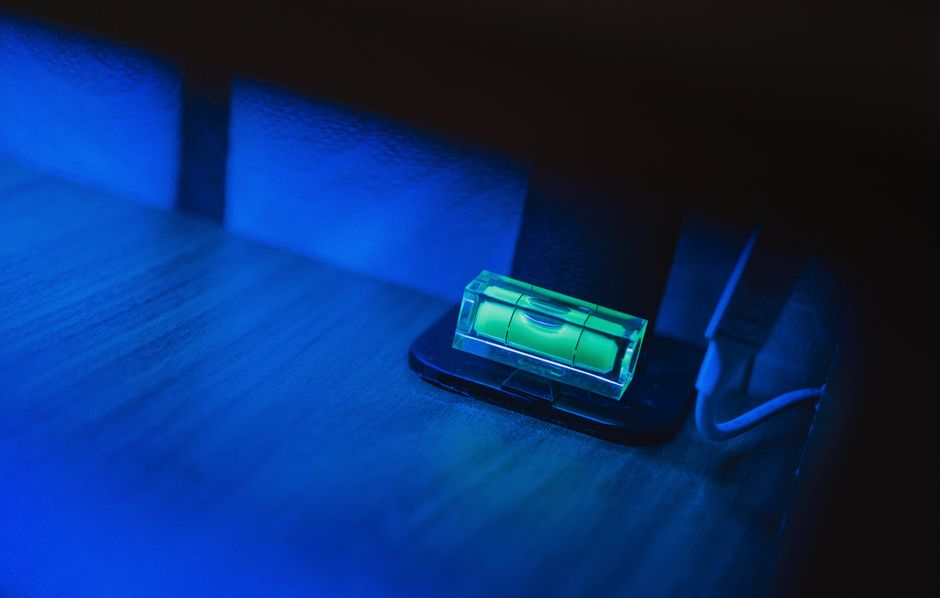
Technicians place precision digital spirit levels across eight opposing axes of the wheel's rim and central rotor. If the table shifts by fractions of a degree due to building vibration or floor movement, adjustable leveling feet under the table are calibrated until the plane reads completely level.
Step 2: Ball Inspection and Rotation
Roulette balls are crafted from composite polymers or ceramic materials. Technicians use digital calipers to verify roundness and measure ball weight to microgram precision. In addition, studios rotate balls throughout the day to prevent predictable wear patterns.
Step 3: Deceleration Rate Checks
Using integrated optical sensors, the Game Control Unit monitors the deceleration rate of the spinning rotor. If the spindle displays unexpected drag or friction, the rotor is dismantled, cleaned, and re-lubricated.
Automated In-Wheel Sensor Technology
Modern live casino wheels feature built-in electronic diagnostic tools:
- Invisible In-Rim Optical Sensors: Modern wheels feature discreet infrared optical sensors embedded within the rim of every pocket.
- Instant Result Detection: The split-second the ball settles into a pocket, sensors log the result into the central computer system without requiring the dealer to manually input the winning number.
- Real-Time Statistical Monitoring: The system tracks spin counts across thousands of rounds, logging results to identify statistical anomalies.
Statistical Auditing: Chi-Square Goodness-of-Fit Tests
Beyond physical tools, learning how live roulette wheels are balanced and tested involves mathematical analysis.
Independent testing agencies (like eCOGRA and iTech Labs) and internal casino risk teams use Chi-Square Goodness-of-Fit tests to audit spin databases:
$$\chi^2 = \sum \frac{(O - E)^2}{E}$$
- Observed Frequency (O): The actual number of times a specific pocket landed over 50,000 to 100,000 spins.
- Expected Frequency (E): The theoretical mathematical frequency based on true randomness (e.g., exactly 1 in 37 for European wheels).
If the statistical deviation for any single number or wheel quadrant exceeds standard confidence intervals, the wheel is removed from the broadcast studio immediately for diagnostic overhaul.
Frequently Asked Questions
How often are live casino roulette wheels inspected?
Live broadcast studios perform baseline visual leveling checks and ball rotations daily. Complete mechanical teardowns, bearing inspections, and comprehensive mathematical database audits take place on a weekly or monthly schedule.
Can a live dealer spin the ball to hit a specific number?
No. Dealers are trained to change spin directions between rounds (clockwise, then counter-clockwise) and vary the speed of both the rotor and the ball. Furthermore, vertical obstacle pins (diamonds) embedded in the ball track introduce chaotic, unpredictable bounces that prevent targeted aiming.
Are automated live roulette wheels (Auto-Roulette) balanced the same way?
Yes. Automated live roulette wheels (which launch balls using compressed air jets without a human dealer) use the same physical leveling, precision pocket rings, and optical sensors as manual tables, undergoing identical mathematical audits.
Conclusion
Understanding how live roulette wheels are balanced and tested illustrates the engineering standards that protect game integrity in modern iGaming. Through digital laser leveling, micrometer ball measurements, precision manufacturing, and continuous statistical analysis, live casino operators eliminate physical biases, ensuring every spin remains an independent, genuinely random event.


Comments
Post a Comment